Health
-

Study finds link between air pollution and Parkinson’s disease
New Delhi: Moderate level of fine particle pollution is associated with a 56 per cent higher risk of developing Parkinson’s disease, new research in the US has found. Previous studies have shown…
-
Antibiotics now ineffective for common childhood infections: Lancet
Sydney: High rates of antibiotic resistance have rendered the drugs used to treat common infections in children and babies, ineffective, according to an alarming study published in Lancet South East Asia on…
-
Youths should balance hard work with healthy diet, lifestyle: Doctors
New Delhi: Youths should learn to balance hard work with a healthy diet, proper sleep and timely exercise, doctors said while cautioning that overwork is leading to early onset of lifestyle diseases.…
-
WHO’s trivalent recommendations will reshape global flu vax mkt: Report
New Delhi: The World Health Organization (WHO) recently advised a reversion to trivalent (three-strain) influenza vaccines for the 2024 southern hemisphere influenza season that typically begins in April. This will likely reshape…
-
Kids with COVID remain infectious for average 3 days: Indian-origin scientists
New York: Children infected with the Omicron variant remained infectious for a median time of three days after testing positive for the virus, Indian-origin scientists have found. School policies that require students…
-
Heated yoga sessions for just once a week may reduce depression
New York: Heated yoga sessions for just once a week may help reduce depression, indicating that heated yoga could be a viable treatment option for patients suffering from moderate-to-severe depressive symptoms, new…
-
Adults with ADHD three times more likely to develop dementia, research finds
New Delhi: Adults with attention-deficit/hyperactivity disorder (ADHD) are nearly three times more likely to develop dementia than those without the mental disorder, researchers have found. Adult ADHD reflects a neurological process that…
-
Hyderabadi woman reclaims ability to laugh without ‘fear’ after 2 decades
Hyderabad: A woman in her seventies has reclaimed her ability to laugh without worry after two decades, thanks to surgery by doctors at a hospital in Hyderabad. The 72-year-old woman from Secunderabad,…
-
New AI tool can identify people with abnormal heart rhythms
New York: Researchers have developed an artificial intelligence (AI) based algorithm that can detect an abnormal heart rhythm or atrial fibrillation in people without symptoms. Atrial fibrillation is an irregular and often…
-
B12 deficiency may trigger chronic inflammation, finds study
New Delhi: A new study has identified a compelling link between vitamin B12 deficiency and chronic inflammation, which is associated with a range of health problems including cardiovascular disease, diabetes and neurodegenerative…
-
US FDA may ban hair-straightening chemical products over health risks
Washington: The US Food and Drug Administration (FDA) is likely to propose a ban on some hair-straightening products, like chemical relaxers and pressing products, due to health risks, according to a report.…
-
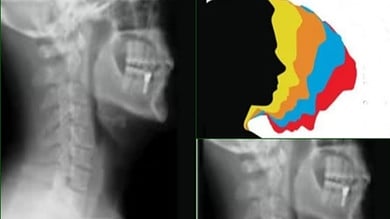
Rising ‘text-neck syndrome’ accounts for 70% OPD visits: Doctors
Faridabad: There has been a significant rise in “text-neck syndrome”, especially among the young adults, which account for about 70 percent in the outpatient department, said city doctors on Monday on the…
-
Hyderabad: Women advised not to be ashamed of bladder, abdominal issues
Hyderabad: Many women suffer from issues such as uncontrolled bladder movement and lower abdominal pain but do not seek medical attention due to shyness and embarrassment. Doctors at a summit on advances…
-
Hyderabad doctors successfully conduct rare double lung transplantation
Hyderabad: Yashoda Hospitals in Secunderabad saved the life of a 23-year-old young man by successfully conducting a rare double lung transplantation. It marks the first successful double lung transplantation conducted in India…
-
How working night shifts messes up appetite and food habits, study reveals
New Delhi: Scientists reveal how working night shifts interferes with appetite, hunger and food habits, sometimes resulting in weight gain. The disruption in the body’s biological clock, or circadian misalignment, brought about…